
Start an Online Business as a Veteran: A Practical Guide From Idea to First Customer
A complete starting roadmap for veterans exploring online business: fit, customer research, a bounded offer, budget, website, first customers, delivery, and support.

Starting an online business becomes more manageable when you treat it as a series of decisions and small experiments. Choose work you can support, identify a customer problem, test a clear offer, and build the processes needed to deliver it. A website and a collection of tools can support that work, but they cannot make those decisions for you.
This guide is for veterans exploring online business, including veterans with disabilities who want an approach that fits their own circumstances. Use the steps as a planning framework, adjusting the pace and methods to your situation.
1. Describe the working arrangement you need
Begin with the kind of week your business must fit. List the time you can reasonably allocate, your preferred communication methods, and the commitments that already shape your schedule. Think about whether you want project work, recurring responsibilities, or a resource customers can buy without a live conversation. These preferences do not identify the business by themselves, but they help you evaluate delivery requirements before accepting promises you cannot maintain.
Keep personal planning details private unless they are relevant to a specific customer arrangement. A client generally needs a reliable response or delivery expectation rather than your full personal history.
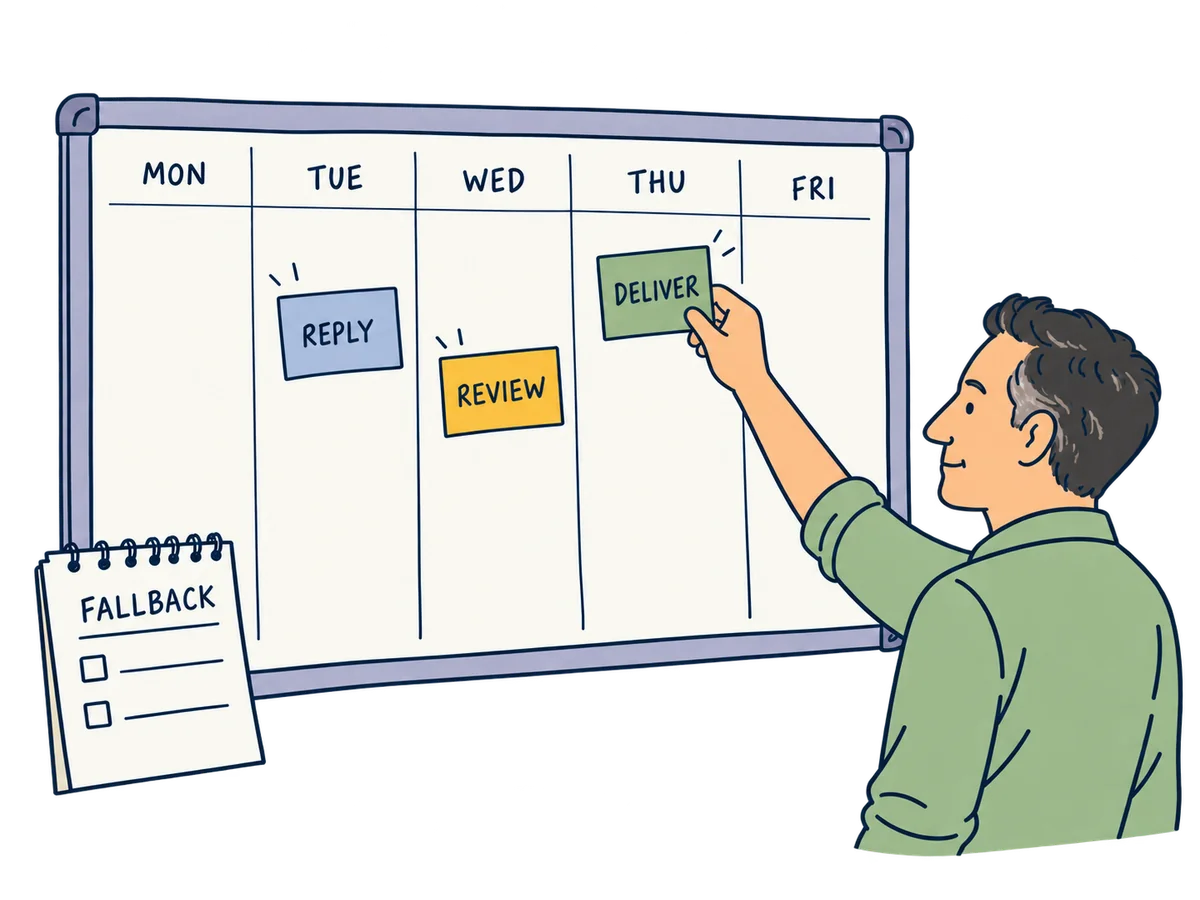
Write down both a normal-capacity week and a smaller fallback version. The fallback might protect customer communication and existing delivery commitments while postponing marketing improvements. This is useful business design for many different circumstances. It does not depend on assuming what any particular disability means for someone's skills, independence, or ability to work.
2. Make an evidence-based skill inventory
List tasks you can already perform and examples that demonstrate them. These might come from employment, volunteering, personal projects, training, or hobbies. Separate a skill from a broad quality: "reliable" describes a useful characteristic, while "turn rough instructions into a readable checklist" describes work you might sell. Look for abilities that create an observable result for someone else.
You can use experience from military service where it is relevant, but there is no need to make service history the subject of every business idea.
For each candidate skill, ask what evidence you have, what still needs practice, and what tools are required. Avoid offering regulated or specialist services beyond your qualifications. A practice project can reveal whether you enjoy the actual task and can evaluate its quality. Choose one or two capabilities to investigate before committing to a long list of possible services.
3. Compare models by the work behind a sale
An online business model describes the transaction: what the customer receives and how the business gets paid. A website, search traffic, or social account is usually a channel supporting it. Examine the work involved before, during, and after a purchase. The apparent convenience of an online sale does not reveal the delivery, maintenance, and support obligations behind it.
Use this comparison as an orientation, then research the specific version you might operate:
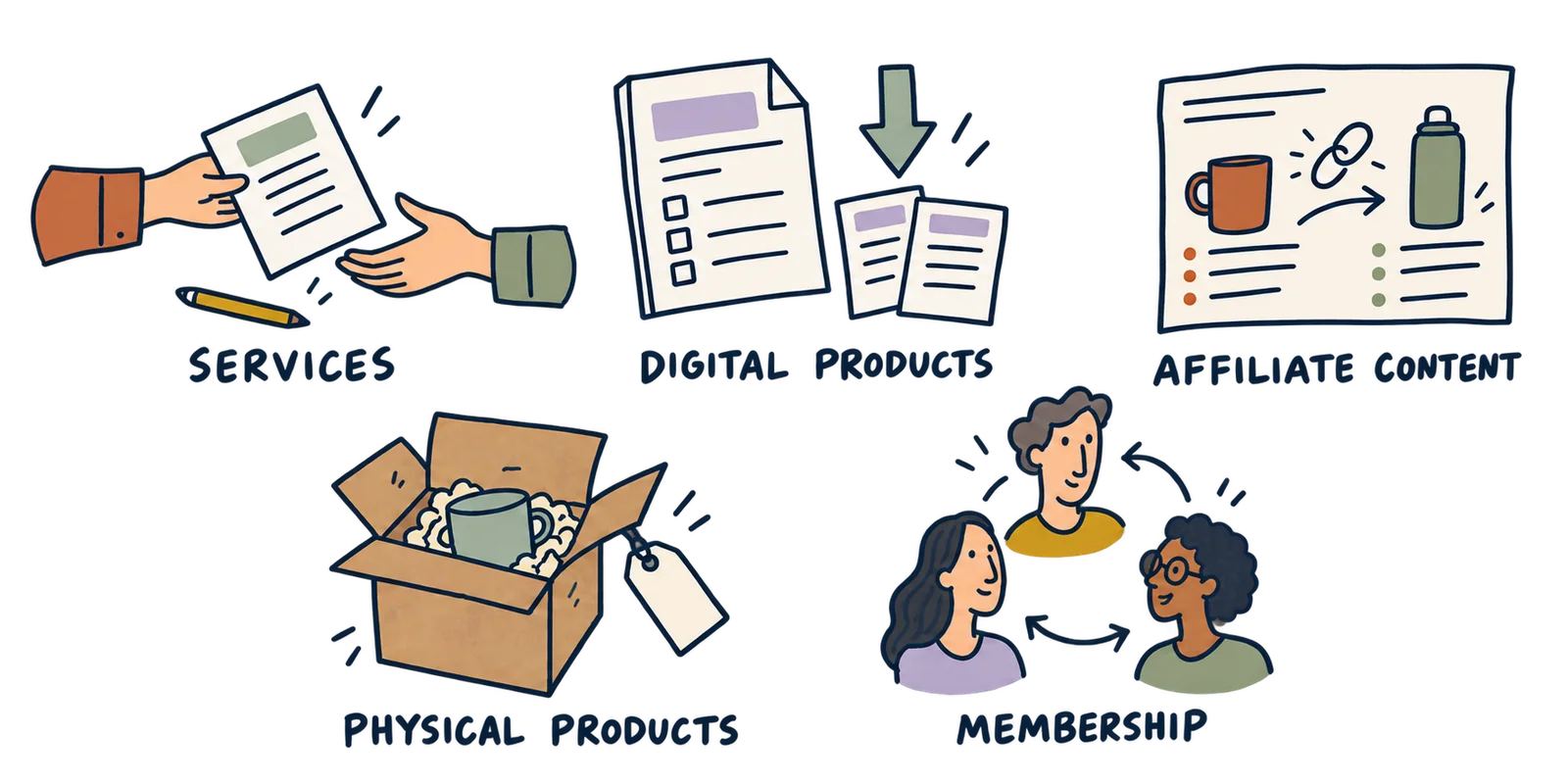
| Model | What brings revenue | Work to examine | Small first test |
|---|---|---|---|
| Freelance service | A client buys a defined task or result | Scope, communication, revisions, delivery | One bounded project |
| Digital product | A buyer purchases a reusable resource | Creation, testing, instructions, support | One usable sample |
| Affiliate publishing | A qualifying tracked action earns a commission | Research, content, audience, updates | One useful comparison |
| Physical products | A buyer orders an item | Supply, fulfillment, returns, support | One tested product process |
| Ongoing membership | Subscribers pay for continued value | Regular delivery, moderation, retention | A small recurring offer |
Do not choose solely from a revenue example. A model can appear attractive while requiring a response schedule or investment that does not fit your circumstances.
Services may let you test a skill directly; reusable products can reduce repeat production but still require buyers and support. Affiliate publishing depends on program conditions and audience behavior. Physical products introduce fulfillment considerations, and memberships create an ongoing promise. The business-model selection article gives a more focused comparison for choosing your first experiment.
Adapt the experiment to the model
For a reusable product, your first test might ask intended buyers to complete a task with one worksheet. Observe whether they understand it without personal coaching, because a download purchased repeatedly needs instructions that travel with the file. For affiliate publishing, investigate whether you can answer a buyer's comparison question with trustworthy evidence and maintain that answer as products change. These experiments examine the work required before you forecast sales or commissions.
A membership needs a different test: can you provide useful recurring value on a schedule you can sustain? One successful session does not establish that ongoing delivery will fit. Define the recurring commitment explicitly before inviting subscribers, then evaluate participation and preparation effort together rather than measuring signups alone.
4. Identify a reachable customer and a repeated problem
Choose a group whose work you can investigate. "Everyone who wants to save time" is difficult to research. "Independent instructors preparing workshop handouts" gives you a clearer place to begin. Ask which task causes friction, how often it occurs, and what people currently do about it. A specific group makes the research more practical without guaranteeing that members will buy your offer.
Reachability matters. You need a respectful, legitimate way to talk with potential users, whether through an existing network, an appropriate community, or a public business channel.
Throughout this guide, consider a hypothetical document-formatting service for independent instructors. The intended result is a readable handout produced from a supplied draft. This example is a planning exercise, not a claim about an actual customer, veteran, or income outcome. Your own customer group and task should come from observations you can check.
5. Ask questions that uncover existing behavior
Speak with intended users about a recent instance of the task. Ask what they needed, what they tried, what worked, and what remained difficult. Questions about what already happened provide useful detail. Asking whether someone likes your idea can produce polite encouragement without explaining whether the problem matters enough to change their behavior or spending.
Keep the conversation open enough that the answer can challenge your assumption. You are learning about the customer's task, not recruiting agreement with a prepared pitch.
For the handout example, useful questions include who prepares the draft, how it is shared, how many changes occur, and what the instructor checks before printing. Record the person's actual words without copying private material into your public notes. Compare patterns across conversations while preserving differences. A few interviews inform an experiment; they do not prove a whole market.
6. Examine alternatives before inventing a gap
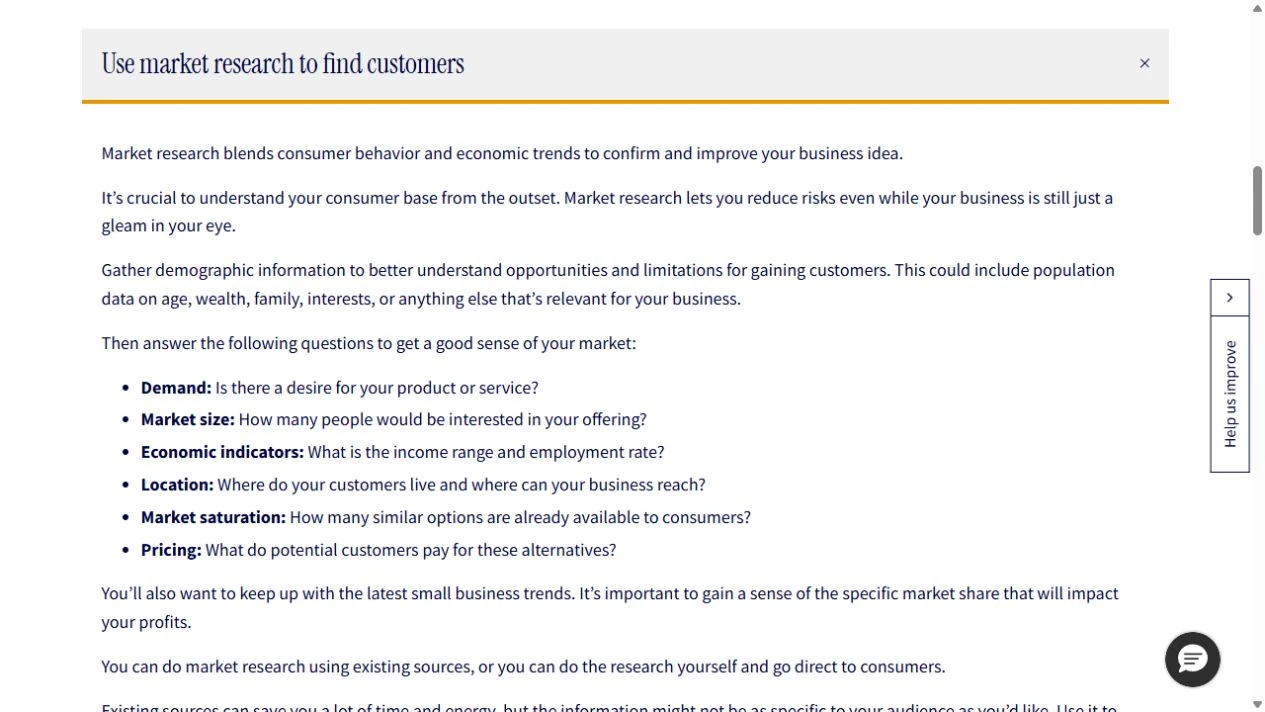
List the ways customers currently solve the problem. Include doing it themselves, asking an assistant, buying a template, using general software, or hiring a specialist. An alternative does not need to look like your proposed business to compete with it. Compare the result, required effort, cost structure, and limitations under the same assumptions.
Existing competition can indicate a recognized problem. It does not establish that your particular offer is needed or that buyers will prefer it.
In the hypothetical handout service, instructors may already use a familiar template. If that template works well, formatting help may be unnecessary. Another group may need consistent styling across several documents and value a different result. Your research should identify the specific reason to change, rather than treating every imperfect-looking document as evidence of a purchase opportunity.
7. Write an offer with a complete but limited result
Describe the input, work, output, and boundaries of one purchase. For the handout service, the input could be a finished draft; the work could be layout and consistency checks; the output could be an editable document and a PDF preview. Identify a maximum length, the revision process, and a realistic delivery window. These details make it easier for the buyer to assess fit and for you to estimate effort.
Keep exclusions understandable. If the package does not include rewriting the content, explain that before the client sends a rough outline expecting a finished lesson.
Avoid adding unrelated tasks merely to make the offer seem generous. Each addition changes the skill, time, or support required. A small result can still be complete and valuable. Draft the service description in plain language, then ask whether an intended customer can explain what they would receive. The freelance packaging guide develops this step with a practical scope checklist.
8. Create proof without inventing experience
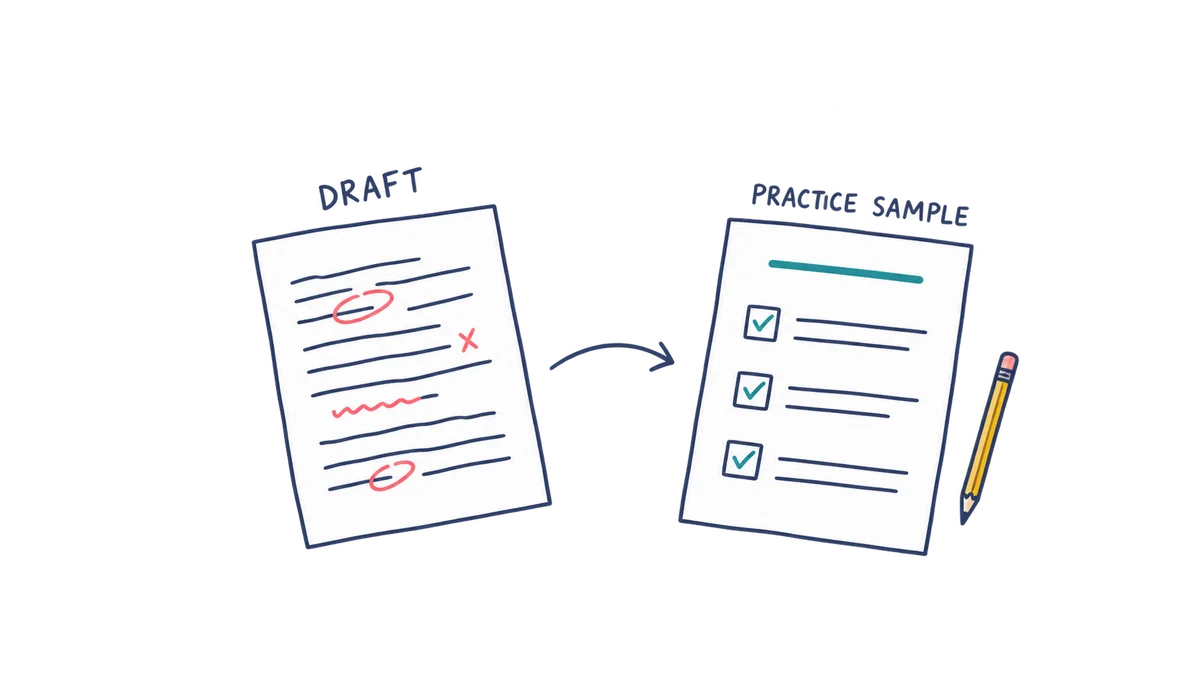
Build a representative sample using your own or fictional material. Show the starting problem and the finished result, then explain the changes. For the hypothetical service, a rough practice handout can become a readable document with consistent headings and instructions. Label the example accurately. It demonstrates an approach without suggesting that a named organization hired you or that a client endorsed it.
Do not borrow another person's confidential work, company identity, or testimonial to make the sample appear established. Your evidence should be usable because you have a legitimate basis to show it.
Test the delivered format as well as the source file. Open the exported document, inspect links and page breaks, and verify that the editable version remains practical. A small sample with a clear explanation of the process can be more persuasive than several decorative mockups that show no actual problem-solving.
9. Run a pilot that tests delivery as well as interest
If conversations support the idea, offer a limited pilot with honest expectations. State what is included, what information is needed, and when the customer receives the result. Accept only work you can support. A pilot is not useful if the attempt to attract customers produces obligations too large to complete or hides the conditions of an unfinished service.
Decide what you will record before work begins: time used, questions asked, revisions requested, and whether the result solved the described problem.
For the handout example, record preparation and communication time alongside formatting. If the client repeatedly requests content rewriting, the offer may be unclear or the actual need may differ from your assumption. If the deliverable is useful but the work takes much longer than expected, revise the process, scope, or price. The validation article explains how to interpret different kinds of evidence.
10. Build a budget around the experiment
Separate one-time spending, recurring charges, and costs triggered by a sale. Include the tools required to deliver reliably, then examine whether you already have a suitable alternative. Check actual prices and renewal conditions. Set a cash limit that remains workable if the experiment earns nothing, rather than using hoped-for sales to justify subscriptions you cannot otherwise sustain.
Keep your time visible too. Research, administration, revisions, and customer contact can consume substantial effort even when they do not appear as separate invoice lines.
Suppose the hypothetical package costs $150 and incurs $15 in direct expenses. The remaining $135 is not take-home income: fixed expenses, taxes, and compensation for your work still matter. If the project uses five total hours, the figure is $27 per hour before those additional costs. At eight hours it is $16.875, approximately $16.88. The arithmetic highlights a delivery assumption; it predicts neither market rates nor future sales.
Use the test-budget article to create a worksheet with verified costs, realistic effort, a spending ceiling, and a review point.
11. Check the administrative requirements that apply to you
Before accepting paid work, investigate the business, tax, licensing, insurance, and recordkeeping arrangements relevant to your activity and location. A small online offer does not automatically remove those questions. Requirements can differ between a freelance service and a product business, and between jurisdictions. Use current official information and appropriate professional help rather than copying the setup of someone operating under different circumstances.
Keep benefits questions separate from generic business advice. Different programs can use different rules, and a disability description alone does not determine how business activity will be treated.
If a program may affect your decision, take the proposed activity, income structure, and working arrangements to the relevant agency or qualified adviser. Ask about reporting responsibilities as well as possible effects. Record the guidance you receive. Do not assume that avoiding a platform, delaying an invoice, or calling earnings a different name resolves an obligation.
Create a short administrative checklist with the unanswered questions, the source to consult, and the next action. This turns a vague worry into a practical part of your preparation.
12. Build a website around a real next step
Once the offer is clear enough to test, build the smallest website that explains it. The visitor should understand who the offer helps, what is included, how the process works, and how to ask about fit. For the handout service, a simple site could show the package, a fictional sample, preparation instructions, and a contact method you can maintain.
Avoid promising features you have not implemented. A form, booking control, or download link should work from the visitor's side before you rely on it.
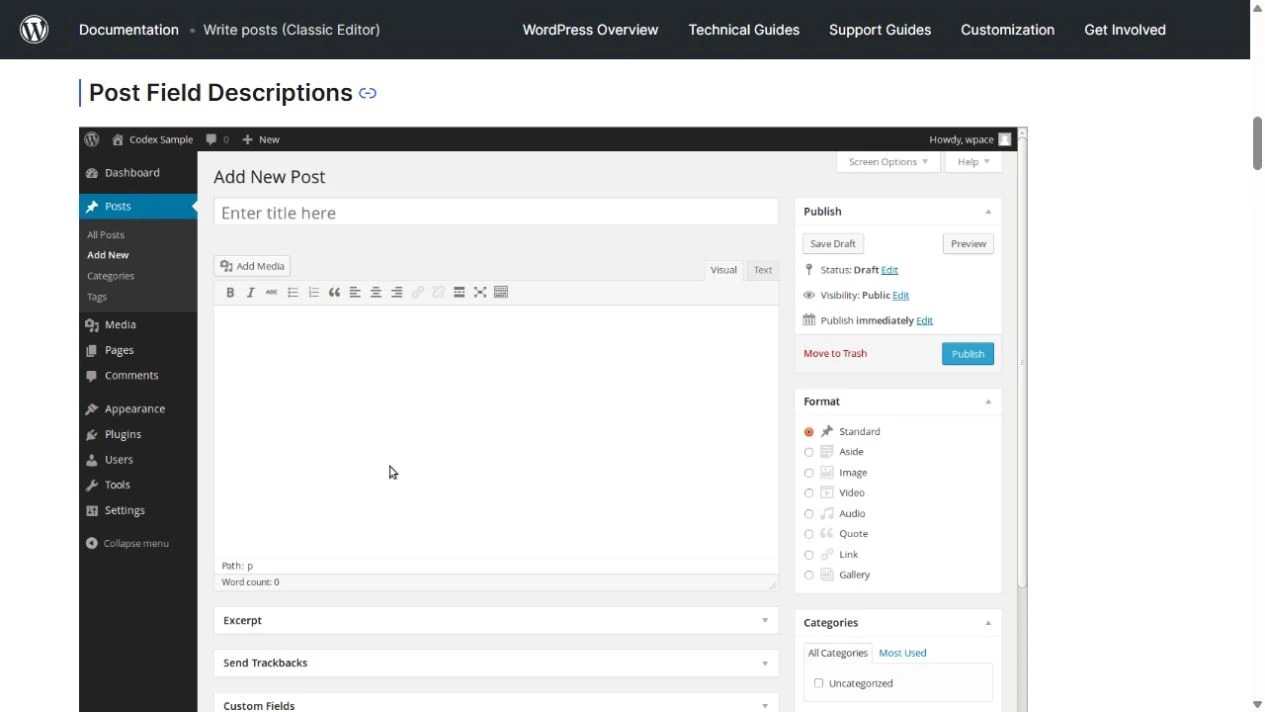
Use a clear menu and preserve routine editing controls. In WordPress, store articles as posts, organize them with categories, and keep shared layout work in reusable templates. Test the site while logged out and on a narrow screen. Include meaningful image alternatives and descriptive links. The website essentials article provides a focused review of the initial pages and maintenance needs.
The purpose of the first version is not to display every possible service. It is to help a suitable visitor understand one dependable offer and take the next step.
13. Establish trust through accurate evidence
Use your sample and explanation of the process to show what you can do. Describe actual qualifications where relevant, and separate practice examples from completed client work. If a customer provides a testimonial, get appropriate permission and preserve its meaning. A small business can communicate clearly without fabricating a larger team, established customer base, or long history of results.
State limitations that affect the buyer's decision. Honesty about scope is more useful than a broad guarantee you have no reliable way to fulfill.
For the handout service, explain whether you correct writing or only formatting, which file types you accept, and how the customer checks the result. If a sample includes placeholder illustrations, identify them as such. A visitor should be able to distinguish the deliverable from the promotional presentation. The same principle applies to product screenshots, tool comparisons, and income examples throughout the business.
14. Publish content that supports a customer decision
Choose questions customers ask before or after buying. For the hypothetical service, those might include preparing a draft, choosing an editable format, or checking a document before printing. Each article should have a clear outcome. A tutorial can explain a process; a comparison can support a choice; a checklist can make a repeated review easier to complete.
Use a screenshot when it clarifies a real step. Attribute outside material, check reuse conditions, and avoid displaying private account or customer information.
Keep topics connected without copying the same explanation into every page. The content-planning article shows how to give related resources distinct roles. For search, start with clear pages and working navigation rather than treating repeated keywords as a substitute for a useful answer. Review the SEO basics article for a manageable first check.
Plan time to maintain the useful pages. An outdated screenshot or broken resource link can undermine a good explanation even when the article originally worked well.
15. Choose one realistic customer channel
Identify where suitable buyers already discuss the task or look for help. Compare an existing network, a professional group, a marketplace, and useful content on your own site by relevance and working demands. You need a legitimate way to contribute and receive inquiries. A large audience matters less than whether its members have the problem and can understand your offer.
Read participation rules before promoting anything. Some communities welcome useful examples but limit direct advertising; others organize promotion in specific places or formats.
For the handout service, a relevant first contribution could explain how instructors can keep headings consistent when preparing several documents. If a service mention is appropriate, connect it briefly to the example and provide a clear contact path. Do not create fake endorsements or pretend to be an independent satisfied customer. Track suitable inquiries rather than counting every reaction as buying interest.
Use the first-customer guide to organize a small outreach experiment. Keep commercial contact compliant with relevant laws and channel rules, and respect a recipient's request to stop.
16. Give interested readers a permission-based follow-up
An email list can maintain contact with people who want continued help, but it creates another promise you must support. Define the subject, value, and frequency before asking for addresses. For the hypothetical service, a monthly document-preparation tip might make sense. A broad list about everything related to business may be harder to write and less clear to subscribers.
Collect permission appropriate to the provider and applicable rules. A past inquiry or public email address is not automatically a subscription to recurring marketing.
Use a signup form that explains what happens next, and test confirmation, resource delivery, and unsubscribe behavior. Keep your welcome focused on fulfilling the promise. Do not buy a list to replace audience research. The email-list article discusses a modest starting workflow; check current legal and provider requirements for the actual audience before sending.
17. Make delivery part of the offer's design
Write a repeatable process for intake, production, checking, delivery, and feedback. The client needs to know which files to send, what you will do with them, and how to review the result. Keep source files and exports clearly named. Verify that the recipient can access the delivered material without giving unintended people access to the project.
Use a short delivery note that identifies the files, explains necessary instructions, and restates the agreed review and revision process. Keep essential information easy to find later.
When a request changes the scope, discuss the difference before performing additional work. For the hypothetical package, rewriting a new lesson is different from correcting the format of the original supplied draft. A clear process reduces misunderstandings without making the relationship impersonal. The client-delivery article provides a practical checklist for this handoff.
18. Design a weekly routine with a fallback
Separate commitments from optional improvements. Customer deliveries, agreed replies, and required administration need a visible place in your schedule. Marketing projects and new samples can be planned around those commitments. Estimate work from actual experience, including the small tasks that appear between major steps. A calendar filled with only production time can hide communication and checking effort.
Keep a restart note when you pause: what is completed, what remains, and the next useful action. This reduces the effort of reconstructing a project later.
Build a lower-capacity version of the week that protects promises already made. If timing changes, communicate early with a concrete update and an achievable alternative. Avoid treating a difficult week as a reason to accept several new urgent projects. The flexible workflow article explains how to organize tasks and review the plan against real use.
Choose methods that work with your equipment and preferences. An accessible paper system or simple calendar can be adequate; adding software is useful only when it improves the actual routine.
19. Use veteran-focused support where it fits
You do not have to evaluate every business question alone. The SBA's resource partner directory includes Veterans Business Outreach Centers, alongside other counseling and mentoring resources. Check the relevant center's current services and contact arrangements. Prepare your customer description, proposed offer, cost worksheet, and unanswered questions so the conversation can focus on your actual plan.
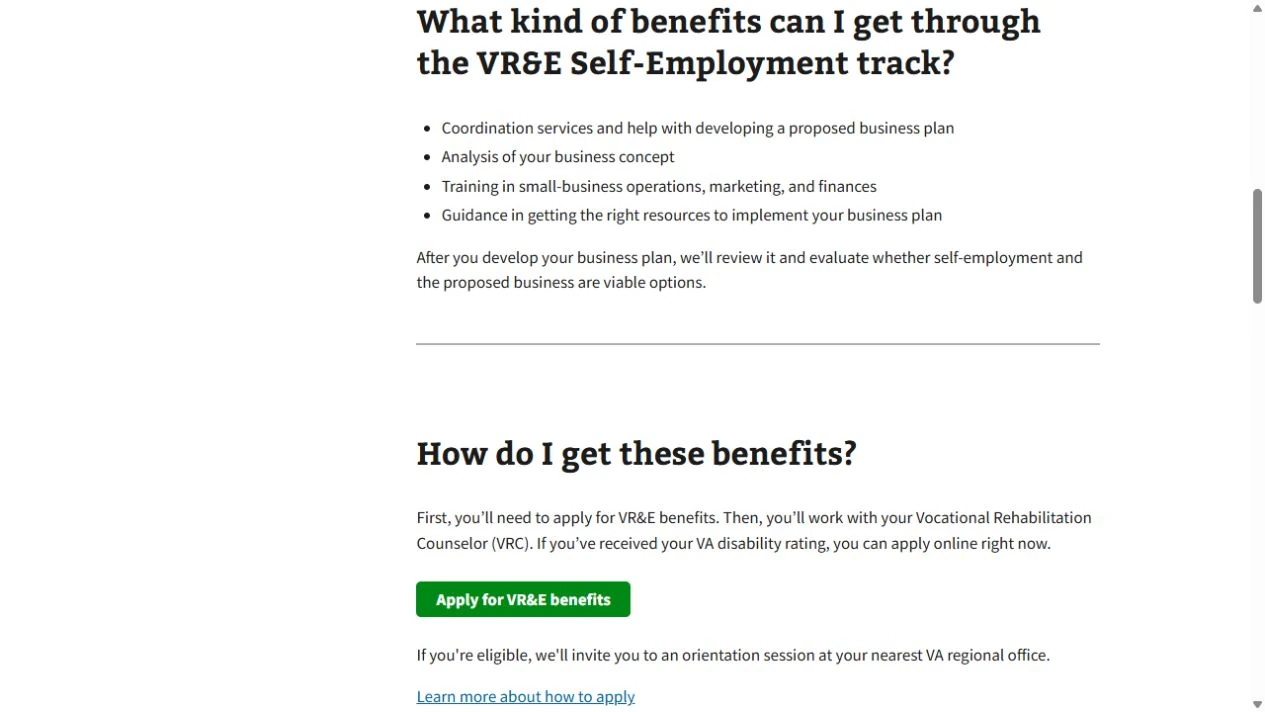
The VA's VR&E Self-Employment track may provide qualifying participants with business-planning help and related support. Eligibility includes enrollment and other stated conditions; it is not automatic for every veteran with a disability.
Read the official requirements and discuss the process with the appropriate VA counselor. The page explains that the proposed business plan is reviewed for viability. Do not interpret the excerpt as a guaranteed award, automatic funding, or an assurance about separate benefits. Individual program and reporting questions belong with the relevant official or qualified adviser.
20. Turn the work into a first-month experiment
Use a month as an organizing example, not a deadline everyone must meet. The stages can take longer depending on your circumstances and the information you need. Preserve their order where one depends on another. There is little value in designing a complicated checkout before you have defined the product or understood how it will be delivered.
| Stage | Practical output | What to learn |
|---|---|---|
| First stage | Skill inventory and two candidate customer groups | Which work and audience you can investigate |
| Second stage | Notes from relevant conversations and alternatives | Whether the problem matters and how it is handled |
| Third stage | One sample, a bounded offer, and a cost worksheet | Whether the offer is understandable and deliverable |
| Fourth stage | A small pilot and a simple contact path | What buyers and actual work reveal |
Keep the experiment focused on one offer. You can save additional ideas without trying to launch them at the same time.
For the hypothetical handout service, the early output might be three conversations, one representative sample, and a written package description. The later output could be a limited project completed under agreed conditions. If research challenges the idea, revising it is part of the experiment. The calendar is useful because it creates review points, not because it guarantees a first customer by a particular date.
At each stage, write one paragraph explaining what you learned and the decision it changes. That record will help when you revisit the plan or discuss it with a mentor.
21. Measure evidence separately from enthusiasm
Track the assumptions that matter: whether suitable people experience the problem, whether they understand the offer, whether they take a meaningful next step, and whether you can deliver profitably at a sustainable pace. A compliment, a page visit, an inquiry, a paid order, and repeat interest are different observations. Treating them as interchangeable can hide where the business needs improvement.
Use a simple record rather than a dashboard you cannot maintain. The most useful measure is one that informs a specific decision.
For the handout example, a customer may value the result but need a shorter turnaround than you can support. Another may want a different file format. Those outcomes suggest different revisions. Review collected revenue, direct costs, and total work time without confusing an invoice with money received. Keep hypothetical calculations separate from actual results as evidence accumulates.
22. Decide what to continue, revise, or stop
At the review point, compare the result with your original assumption. Continue when the problem is meaningful, the offer is understood, and delivery fits the business you want to operate. Revise when the evidence points to a specific change, such as a different customer group or clearer scope. Stop a version when its ordinary demands or economics do not fit your circumstances, even if the idea remains interesting.
Changing direction does not require discarding everything learned. Keep the useful customer language, samples, and process observations, with appropriate permissions and context.
Choose the next experiment from evidence rather than from another promotional income story. It may be a second pilot, a clearer offer description, or a conversation with a different buyer group. Avoid responding to uncertainty by purchasing a larger collection of tools. A new expense should have an identified role in testing or delivering the next version.
Take the next step with one clear worksheet
Create a document with five entries: your available working arrangement, one demonstrable skill, one reachable customer group, one repeated problem, and one small test. Add the spending limit and the evidence you want to collect. That worksheet is enough to begin a useful conversation and identify what needs checking next.
You can build the business in stages without pretending the outcome is certain. Start with a test that produces information you can use, then make the next decision from what actually happens.